


Aranjuez, Spain
Friendship since: 2026
Population: 63.040
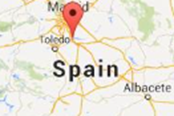
Location: Die Stadt liegt rund 50 km südlich von Madrid am Südufer des Tajo
Province: Madrid
Autonomous Community: Madrid
Mayor: Miguel Gómez Herrero
Website:https://aranjuez.es/
Social Media: @aytoaranjuez
Establishing the friendship
There is an active exchange between the Ellental high schools and I.E.S. Alpajés High School (since 2003, with students aged 15–16), and between the Ellental high schools and C.E.I.P. San Fernando (since 2023, with students aged 11–12), as well as between the Bietigheim-Bissingen Adult Education Center and the E.O.I. Aranjuez public language school (since 2006, with adult students). As a result of these diverse exchanges, a declaration of friendship between the two cities was signed in June 2026 in the presence of the municipal council.
History
The Romans settled in Aranjuez early on, but the town remained under Arab rule for a long time.
The landscape along the river Tajo was part of the territory ruled by the Order of Santiago (a military order), which built a small hunting lodge in Aranjuez, which at the time consisted of only a few houses.
The Catholic King Ferdinand II was appointed by Pope Alexander VI in 1493 as the Order’s representative. After his death, he was succeeded in 1516 by Charles V, who made Aranjuez a royal possession. Charles V began expanding the small palace and its park and built the first bridge across the Tajo. Philip II declared Aranjuez a royal summer residence in 1560 and granted the town the title “Sitio Real.”
It was not until 1656 that the first bridge for public use was built, and from the mid-18th century onward, the first settlement for the general public was permitted.
In March 1808, the Spanish Revolution broke out in the city, overthrowing the “Prince of Peace,” Godoy, as well as King Charles IV. In 1835, the city was officially founded under the then-mayor, José Ignacio de Ibarrola.
The city was systematically developed according to Italian models in a grid pattern with spacious avenues and squares.
Aranjuez today
Today’s cityscape of Aranjuez consists of a historic old town centre designated as a protected heritage site, royal palaces, and gardens along the banks of the Tajo River.
The city comprises the following neighborhoods: Centro (downtown), Vergel, Olivas, Aves, Nuevo Aranjuez (New Aranjuez), Foso, Moreras, and La Montaña (The Mountain).
Aranjuez is situated in a beautiful, wooded valley. The old town features a regular architectural layout reminiscent of the Dutch style. The city’s largest and most famous landmark is the Palace of Aranjuez, built in 1727 by Pedro Caro, which served as the former summer residence of the Spanish monarchs. The palace is surrounded by extensive gardens with groves of trees, deciduous woodlands, and meadows. For centuries, the Spanish monarchs spent the spring at the Palace of Aranjuez, as it was situated in a cool and fertile floodplain at the confluence of the Jarama and Tajo rivers. Thanks to its expansive, monumental gardens, Aranjuez was designated a World Heritage Site by UNESCO in December 2001.
The Old Town has been designated a historic-artistic ensemble because it is a unique example of Baroque urban planning. Designed by Giacome Bonavia in 1747, the town was conceived from the very beginning as an elegant place where buildings of sublime design were to be erected. Grand houses with patios, domes, palaces, monasteries, balconies, squares, and avenues bear witness to four hundred years of history.
Another defining feature of Aranjuez is its various gardens. At the foot of the palace lies the Jardin del Parterre, laid out in the English style, whose fountain sculptures are particularly noteworthy.
Attractions
Iglesia del Alpajes de San Antonio
The church was built in 1681 and modeled after the Church of El Gesù in Rome. Today it serves as a parish church.
Royal Palace of Aranjuez
The Royal Palace of Aranjuez is a Baroque palace built in the 16th century on the site of a former monastery.
Casa del Labrador
The palace, whose name translates to “House of the Farmworker,” was intended for royal use. It was designed to complement the Royal Palace and provide the royal family with a place where they could spend the day free from the usual constraints of court life.
Museo de Faluas Reales
This museum showcases the city’s cultural heritage.
Partnership Connctions
Ellental high schools
Bietigheim-Bissingen Adult Education Centre